Call Us Now
+91********65Enquiry Us
**********o@gmail.com
Call Us Now
+91********65Enquiry Us
**********o@gmail.com

| Category | Tennis Elbow Physiotherapy |
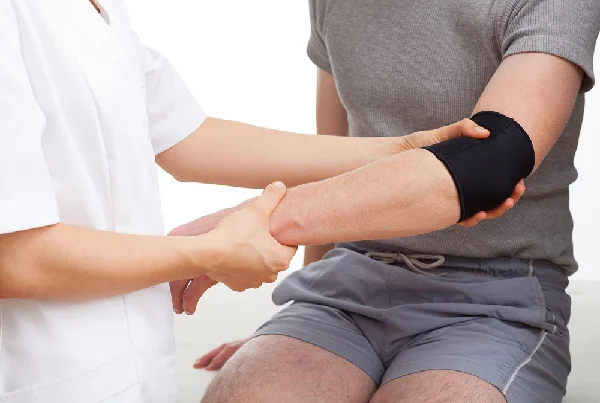
At Dr. Aggarwal Physio Centre, we are providing the best Tennis Elbow Treatment in Noida. Tendinitis is a condition that results in tendons swelling and causes pain in the elbow or arm. These tendons connect your lower arm muscles to the bone with tough tissue. Tennis elbow can still be contracted, despite its name.
Repetitive gripping activities can cause tennis elbow. It is especially true if the thumb and first two fingers are used. For elbow pain, tennis elbow is the most common reason people visit their doctor. Although it can occur in anyone, the most common age for this condition is 40 years old.
Tennis Elbow: Causes
Over time, tennis elbow is a common condition. Repetitive movements, such as gripping the racket while swinging, can strain muscles and cause damage to the tendons. The tissue can become damaged from constant tugging.
You might get tennis elbow from:
Tennis Elbow: What are the symptoms?
Tendinitis is a condition that causes pain and tenderness around the bony knob at the elbow. It is the location where the injured tendon connects to the bone. You may feel the pain radiating into your upper or lower arms. The elbow is the most affected, but you will likely feel pain when using your hands.
The most severe pain from tennis elbow is when you are:
What is the diagnosis of tennis elbow?
Your physiotherapist will ask you for a detailed pain history. They will also examine your neck, shoulder, elbow, wrist, and neck. The physiotherapist may ask you to apply pressure to the area or move your fingers, elbows, and wrists in different directions. Most cases can be diagnosed based on a medical history and a physical exam. Your physiotherapist may ask you to order additional tests to confirm or rule out any other conditions that might present with the same symptoms. These tests may include
Goals of Physiotherapy for Tennis Elbow:
Management of the Tennis Elbow Physiotherapy
The type of treatment you choose will depend on many factors, including the severity and duration of your symptoms, how they impact daily life, past treatments, and their results.
Tennis elbow can be self-limiting. If your symptoms are not severe, your doctor might recommend conservative management to determine if it improves on its own. However, it may take several weeks or even months before the pain completely disappears. According to some studies, the average time it takes for a typical episode to go away is between six and two years.
The treatment aims to reduce the stress/load on the tendons and the pain and preserve movement and grip strength. There are many treatment options available.


